
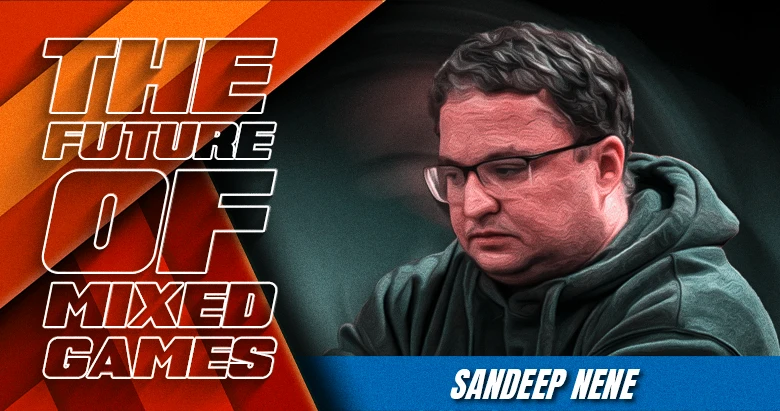
The Future of Mixed Games: Episode 2 – Sandeep Nene


Festival events are widely known for the variety of mixed games they offer, even though Hold’em continues to dominate most tournament schedules. What mixed games bring to poker is something truly unique: Friendships, fun at the tables, and a willingness among players to help each other, highlighting the purest form of sportsmanship.
In this serie of articles, The Future of Mixed Games, we dive into the world of mixed games alongside notable names in the poker industry, and today, episode number #2, featured by Sandeep Nene!
In the first episode, we had Tobias Leknes giving his point of view on the mixed games being played in 2026, and now we have someone truly special being our second guest in this series of articles about mixed games. Sandeep Nene, living in The Netherlands, is a regular guest at The Festival Series, but you basically see him all over the place. There is only one condition: Mixed Games need to be available at the event.
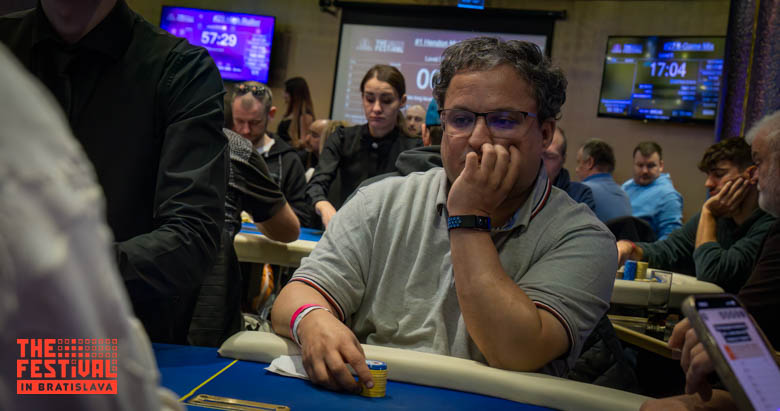
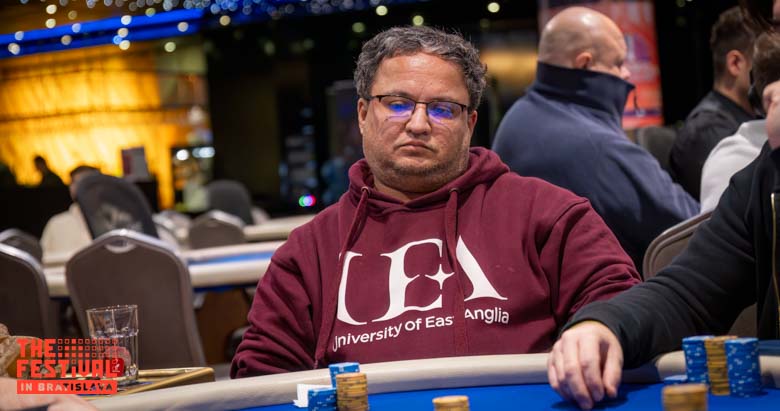
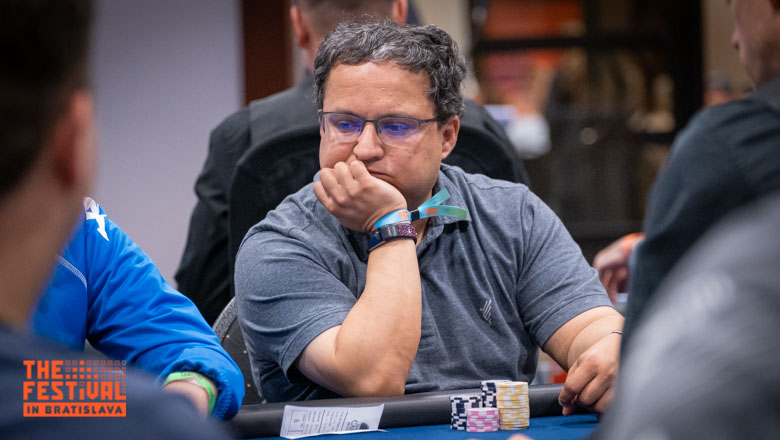
This year, I had the pleasure of meeting Sandeep at our very own The Festival Bratislava, where he cashed in four different tournaments. I then met him again in April at the Irish Poker Open, where he cashed in the H.O.R.S.E. Championship tournament.
It’s always a pleasure meeting familiar faces at live events. There’s always that friendly nod, asking each other how things are going, wishing one another good luck in the tournament, and immediately sensing that Sandeep is exactly the kind of player who best represents mixed games. Yes, he’s focused on the game, but he’s always friendly, always smiling, and always good with the entire table. He’s the type of player you’re far more likely to see in mixed-game tournaments or cash games than at a hold’em table.
Let’s kick off Episode #2!
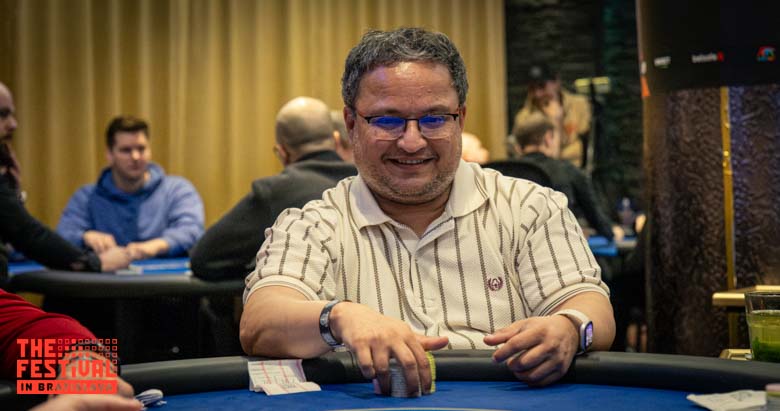
You've had major success recently at APT Taipei, especially in mixed-game events. Did those wins change the way you see your future in poker going into 2026?
''Honestly, those wins meant a lot, especially because I'm an amateur and this isn't my day job. It's really motivating, and it tells me the time I am putting in is going somewhere. What I'd say it changed is that I'm even more confident going into the bracelet events I'm playing this year, I really want to try and make a deep run in one of them. But it doesn't change my underlying goal, which is just to be a little better the next time I sit down than I was the last time. I love the game and I want to keep getting better at it, that's pretty much it.''
What originally pulled you toward mixed games instead of staying focused purely on No-Limit Hold'em like most modern players?
''I came up playing Hold'em like everyone else, but at some point I just got bored. Every spot started to feel like I was running a sim instead of playing poker. Mixed games pulled me back in, specifically the limit games. I prefer limit over pot-limit and no-limit: you can't bomb pots to muscle people off, every bet matters, and the number of real decisions per hand is so much higher. That said, I still love a deep-structured NLHE event, Monster Stack at the WSOP is one of my favourite tournaments of the year. When you've got chips and time, NLHE is a beautiful game. It's the steep-structured ones I've drifted away from, because there the pros have such a huge edge, for them it's just another tournament, and as an amateur you're really swimming uphill. Mixed games and deep NLHE both reward the same things for me: real decisions, real reads, real discipline.''


You live in the Netherlands. How do you see the mixed games community there? Is there a lot being offered, or do you need to travel abroad for the games you like to play?
''Honestly, there are no mixed games in the Netherlands. None. My only option is to travel. Most of my volume comes from trips abroad: Festival stops, Vegas in the summer, the bigger series around Europe, and now APT. Some of the crazy variants they spread out there have genuinely helped me improve my reads and my understanding of symmetry. I'd love to see a Dutch mixed-game scene grow, but I'm a realist: Right now it's plane tickets or nothing. As an amateur it's a bigger commitment to make, but the games are worth it for me.''
A lot of people describe mixed games as the "real poker." Do you agree with that, or do you think that idea is overrated?
''I get why people say it, and there's some truth in it, you can't just memorize a chart and grind. But I think putting it that way is a bit much. Hold'em with deep structures is still so much more than just maths, even today. From where I'm sitting, what I'd say is that mixed games, especially the limit games, force you to play more poker per hand. You can't autopilot, you can't really lean on a solver, you have to read the table. "Real poker" feels dramatic to me. "Complete poker" probably fits better.''
You've played across different poker communities and countries, including several Festival stops. What makes the mixed-game scene different from the regular Hold'em world culturally and personally?
''Culturally it's just a different vibe. The Hold'em circuit can feel transactional, headphones on, hoodie up, grind. The mixed-game tables tend to be more social, and there's almost always a story going on. People actually talk to each other. There's less ego too, because everyone's losing pots in games they don't love, so there's a shared humility. As someone who's there because I love the game, not because it's my livelihood, that social side matters a lot. I've made way more lasting friendships at the mixed tables than anywhere else in poker. And you get such a wide field too, from real beginners just having fun to top mixed-game pros who are there because they genuinely love the games.''
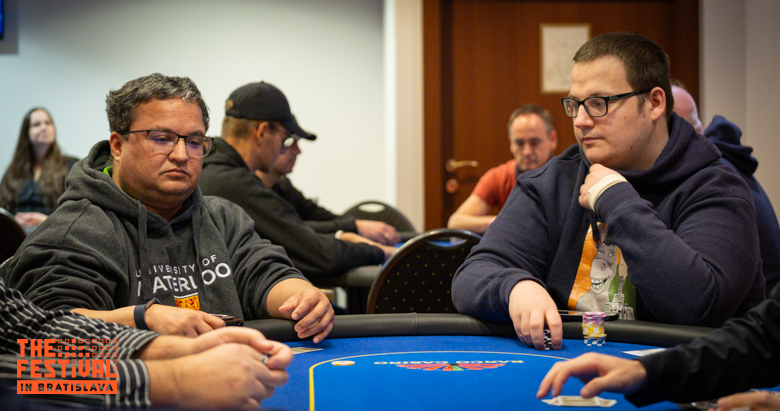
Where do you honestly see mixed games heading over the next five years? Do you think we're at the beginning of real growth, or will it always stay a niche inside poker?
I'm cautiously optimistic, but from my view the biggest catalyst would be online. If GGPoker started adding real mixed-game offerings the way PokerStars has, and ran something like a mixed-game SCOOP series, it would change everything. GG has the volume, the recreational players, the brand. Right now if you want reps online in mixed games, the options are pretty limited. Put 2-7 Triple Draw, Razz, Stud Hi-Lo, the full mix on a site with that kind of traffic, and you'd see a whole new generation come in. Also, a bit selfishly, I can't play PokerStars in the Netherlands. Live, the growth is already happening: more events, more streams, more content. But online is the unlock. The next five years really come down to whether one of the big sites decides to commit.
Do you think younger online players are truly interested in learning mixed games, or are they still too focused on solver-based Hold'em?
''It's a mix. There's a small group who are genuinely curious and good, they've watched the streams, they see what's possible. But most are still locked into solver Hold'em, because that's where the structured learning lives and, honestly, that's where the money is. They all want to become pros and earn a living off poker, and you can't really blame them for going where the EV is. There's also a chicken-and-egg thing with what I just said: without games to play online, why would anyone study? Once GG or someone at that scale runs real mixed-game traffic, the study tools will follow, and the wave will come.''

What is your absolute favourite mixed game out there? And why?
''Any razz variant, every time. Razz is the purest form of poker I've found. Every card outside your hole cards is face up, every street tells a story, and you have to actually read your opponents based on what their boards are saying. There's nowhere to hide. It rewards patience, discipline, and paying attention, which are exactly the parts of the game I most enjoy working on. Right behind it would be any hi-lo variant, Stud 8, Omaha 8, because the scoop hunt makes every decision so layered. I'm still learning something new every time I play them, and that's a big part of why I love them.''
What's the biggest misconception people have about mixed-game players and the lifestyle around those games?
''The biggest one for me is that mixed games have more variance. People say it all the time, and it sounds right, more games, more swings, more weird hands. But I'd actually push back, especially from an amateur's perspective. No recreational NLHE player is ever going to play enough hands in their lifetime to hit the statistical convergence that makes a GTO or +EV strategy actually profitable. So for an amateur, NLHE is huge variance, people just call it normal because everyone plays it. I had a recent example from the Rotterdam series: picked up aces, a top Dutch pro picked up kings, we got it all-in pre-flop, and of course he spiked the king. In a limit game I'd have had a second chance to claw it back and still be in the tournament, but in NLHE, that one card ends your day. Mixed games have more decision points per hand and more skill density, and over a reasonable sample I think they can be lower variance than people assume, especially if poker isn't your job. The other misconception is that mixed-game players are all old-school gamblers chasing nostalgia. That just isn't what I see. Take someone like Thor, his poker skills are better than most NLHE pros.''
Poker players usually talk about results, but what has poker taught you personally about yourself, mentally, emotionally, or even outside the game?
''A lot. The biggest one is patience and learning to separate decisions from results, you can do everything right and lose, do everything wrong and win, and once that really sinks in it bleeds into every part of life. But poker has also taught me something about myself: I want to be excellent at everything I do, and poker is one of the few arenas where you can never actually arrive. There's always another level, another leak, another game. As an amateur, I find that incredibly satisfying, it's a hobby that gives me back exactly as much as I put in, and the road never ends.''
After all the travel, variance, swings, and long tournament schedules, what still keeps you motivated and excited to sit down and play?
''Simple answer: I just love the game. The variance and travel absolutely wear you down, and I've had stretches where I needed to step back. But I'm constantly trying to improve, and that drive doesn't go away, every session is a chance to be a little better than the last time. Add in the community, knowing you'll see the same faces around the world, and it always pulls me back to the table.''
If you could give one piece of advice to a serious Hold'em player thinking about transitioning into mixed games, what would it be, and what mistakes should they avoid immediately?
''This is just from one amateur to another, but, play low and play a lot. Don't try to study your way in; you have to feel the games. The thing I see Hold'em players struggle with most is bringing NLHE instincts into limit: overvaluing aggression, underestimating showdown value, and not respecting how punishing limits are when you bleed bets. I'd actually suggest starting with a limit game rather than pot-limit — limit teaches you discipline in a way nothing else does. Pick one game first, get comfortable, then add the others one by one. And go in expecting to play badly at first, because you will, and that's fine. The other thing I'd say is: playing mixed games will absolutely improve your reads in NLHE. It'll make you a better Hold'em player. Honestly though, I'm not sure most modern NLHE players even care about that anymore: it's all charts and solvers. But if you do care, mixed games are the fastest way I know to get there.''
''I would also like to add one more thing: It would be great if all players could be nicer to new mixed games players at the table, or else we stop generating interest. When I started playing mixed games, some were really good and some were really obnoxious.''