The Future of Mixed Games: Episode 3 – Jens Vörtmann


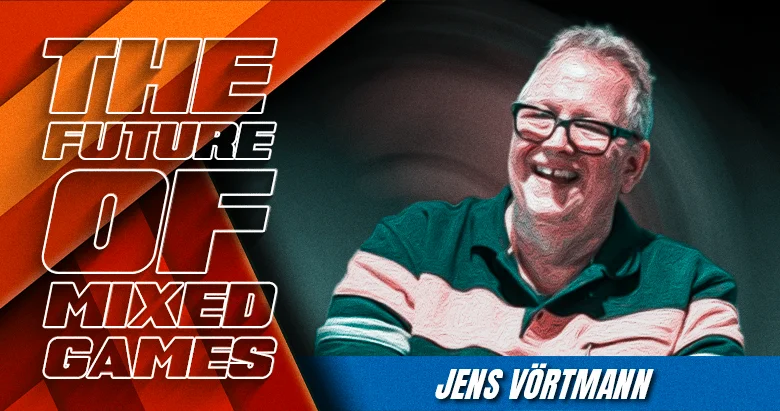
Festival events are widely known for the variety of mixed games they offer, even though Hold’em continues to dominate most tournament schedules. What mixed games bring to poker is something truly unique: Friendships, fun at the tables, and a willingness among players to help each other, highlighting the purest form of sportsmanship.
In this serie of articles, The Future of Mixed Games, we dive into the world of mixed games alongside notable names in the poker industry, and today, episode number #3, featured by Jens Vörtmann!
In the first episode, we had Norwegian star Tobias Leknes giving his take about mixed games, while in the second episode we had the always friendly Sandeep Nene in the spotlights.
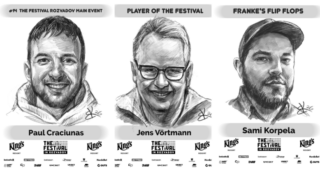
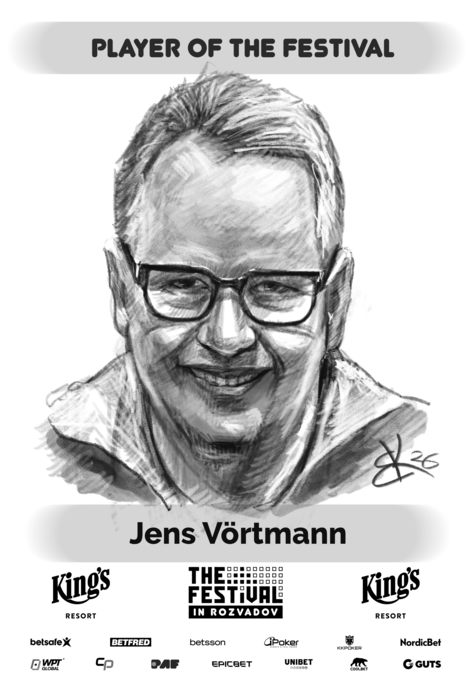
For this episode, we sat down with Jens Vörtmann, fresh off winning the Player of the Series title at The Festival Rozvadov. With more than two decades of experience playing mixed games, Jens shares his thoughts on how the format has evolved, where it's headed, and why he believes the future of mixed games is brighter than ever.
When you approach Jens and mention mixed games, he immediately opens up and you can feel instantly the passion this man has for the game. We've seen Jens around more often at The Festival, and to be able to see Jens winning the Player of the Series title by just 0,25 points, was truly iconic in our opinion. To be able to have Jens among the Player of the Series winners, someone who has won a WSOP Bracelet before, is something special. And because of this result, we thought it would be the perfect occasion to add Jens to the series called 'The Future of Mixed Games'.
Let’s kick off Episode #3!

You've been a poker player for over two decades now. When you turned pro back in 2005, mixed games were already part of the landscape, but they felt like a niche within a niche. How has the mixed-game ecosystem evolved in those 20 years, and what does that evolution tell you about where it's heading?
When I started playing poker in 2003, there was only spread-limit Seven Card Stud in our local casino in Dortmund, Germany. Just two years later the main game had become a mixed game with Limit Hold'em, Omaha High and Seven Card Stud. It was a wild game where pots in the €5-30 spread-limit regularly reached €1,000 and sometimes even €2,000.
Mixed games were a niche in Europe, but they were standard in our casino, so I grew up with them and loved them from the very beginning.
When poker exploded after Chris Moneymaker's Main Event win and all the TV coverage, every new player wanted to play No-Limit Hold'em. Mixed games suffered because NL Hold'em became the most profitable game. But in recent years I have been very happy to see a slow but steady shift of interest back towards mixed games, and I hope that trend continues.
Many players enjoy the much friendlier atmosphere in mixed games, the faster pace, the increased communication at the table, fewer headphones, and of course the variety of games.
The Festival Series has been expanding its mixed-game offerings significantly, from H.O.R.S.E. and 8-Game to the new 10-Game Mix High Roller that debuted in Bratislava, featuring games like Sviten Special and Pot-Limit 2-7 Double Draw. What does it mean for the future of mixed games when a major European festival not only includes these variants but puts them front and center with a High Roller?
First of all, I am very thankful that you put so much focus on mixed games, and I am happy to support this, not only by participating but also by promoting The Festival.
Pot-Limit 2-7 Double Draw is a fantastic game, so it's great to have it included in the High Roller 10-Game Mix. I love it.
At the same time, I also think it is important to keep the smaller mixed-game events and the TORSES Main Event focused on the standard games only. I already consider Sviten Special a standard game because of its popularity. That makes the schedule more appealing and less intimidating for the No-Limit Hold'em and PLO community who might want to give mixed games a try.

You've cashed at multiple Festival stops, finishing second in Baby T.O.R.S.E.S. Supreme, third in H.O.R.S.E., and sixth in the Pot-Limit Razz P.K.O. What keeps you coming back to The Festival specifically, and what role do you think events like this play in growing the mixed-game player base in Europe?
This question is easy. The nice and friendly atmosphere, together with the variety of daily mixed-game tournaments, keeps me coming back. I also really enjoy meeting other members of the mixed-game community.
The Festival plays a key role in my opinion because it has become the pioneer for mixed-game tournaments in Europe.
The Festival Rozvadov featured a €550 TORSES Mixed Games Main Event as the headline tournament for mixed-game players. Do you think we'll eventually see a mixed-game Main Event that rivals the No-Limit Hold'em Main Event in prestige and prize pools? Or will Hold'em always be the crown jewel?
I don't see the TORSES Main Event challenging the prize pool of the No-Limit Hold'em Main Event in the near or medium-term future. But that doesn't really matter to me, as long as the event continues to grow steadily while maintaining its special atmosphere.
You've described limit games as requiring "more poker per hand" because every bet matters and you can't simply bomb pots. With the rise of solvers and GTO in Hold'em, do you think mixed games offer a refuge for players who want to rely more on intuition, reads and table dynamics? Is that what will attract the next generation?
In No-Limit Hold'em, only a few pots usually determine the outcome of an entire session because that's where all the money goes in. Most other pots remain relatively small.
In fixed-limit games you don't have those monster pots, but the average pot is much bigger, and many more hands matter to your overall result. Personally, I enjoy that much more.
Regarding solvers and GTO, whether we like them or not, we have to deal with them. They're already being developed for mixed games and are expected to become commercially available soon.
However, learning solver strategies for many different games, and having all that knowledge available in your head when you need it at the table. is much more challenging than mastering just one game, especially for older people like me.
That's why I think intuition, live reads and table dynamics will continue to play a bigger role in mixed games than they do in No-Limit Hold'em or PLO, even though game theory will certainly become increasingly important.
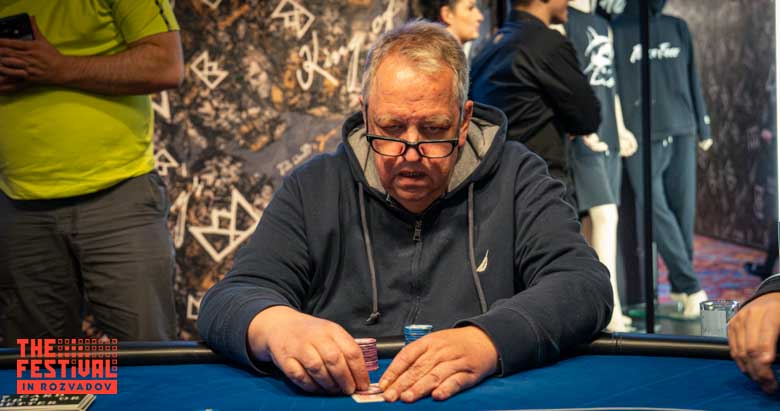

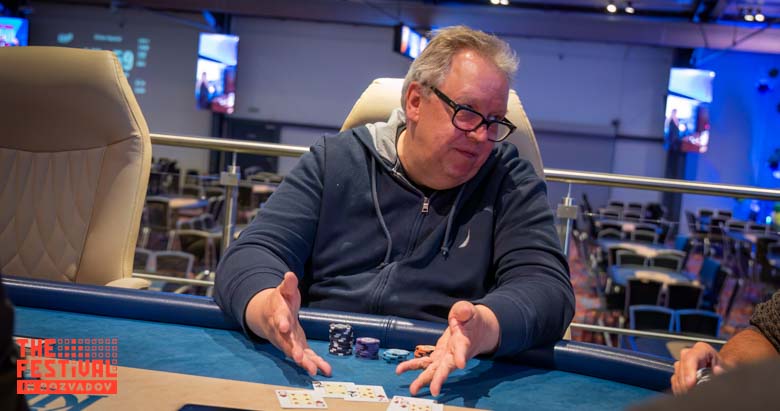
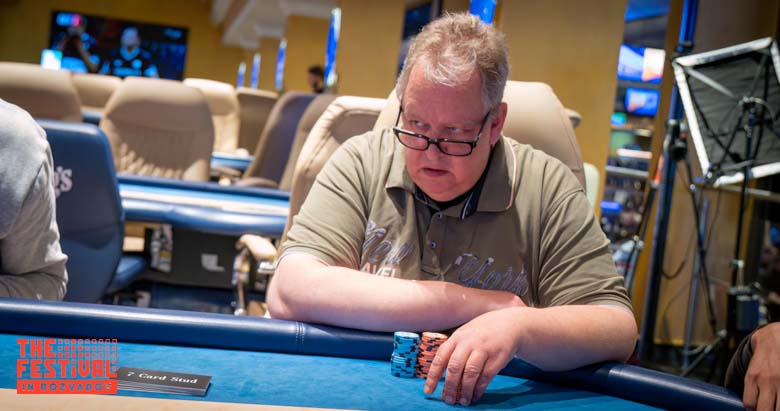
The European Mixed Poker Championship in Dublin recently saw you finish second in the Player of the Series standings. Events like EMPC and The Festival are appearing more frequently. Do you see a dedicated European mixed-game circuit emerging in the next five years, and what would it take?
The EMPC is my favourite event besides The Festival, and I was glad to see you mention it in your interview. Mixed games will grow faster if organisers support each other, and I am happy to see that happening.
There are already excellent mixed-game events in Ireland, the UK, Austria and Liechtenstein, so I definitely see the potential for a European Mixed Game Circuit.
What would it take? Support from one or more online poker sites, and above all a dedicated group of people willing to organise everything and put in the necessary work.
Guys from The Festival: Let's go!
If you could wave a magic wand and add one thing to The Festival's mixed-game schedule, a new variant, a different format or a larger guarantee—what would it be and why?
I would love to see a dedicated draw-game mix included, featuring A-5 Triple Draw, 2-7 Triple Draw, Badugi, Badeucy and Badacey.
Larger guarantees are less important to me personally, although I admit they may attract more new players.
Online poker has been dominated by No-Limit Hold'em for years. You've played mixed games both live and online. What would it take for a major online site to build a thriving mixed-game ecosystem, and do you think that's realistic in the next five years?
Stricter regulations have made it increasingly difficult for online poker sites to generate enough traffic in mixed games. Even on PokerStars, the action dried up as more and more countries became separated into different player pools.
It would require an online poker site that is fully licensed across most countries while sharing one common player pool. Unfortunately, I don't see that happening in the current political environment.
The Festival introduced a 10-Game Mix High Roller that removed all Hold'em variants to focus entirely on the more exotic games. That's a bold statement. Do you think this kind of innovation is essential for the future growth of mixed games?
Personally, I love the mix of more exotic games. But when it comes to growing the player base, I wouldn't mind seeing games like PLO, No-Limit Hold'em and Limit Hold'em included in some formats.
Every player has favourite games where they feel they have an edge, so why not let the No-Limit Hold'em and PLO players experience that feeling as well?
The Festival Series now spans multiple European destinations, including Bratislava, Rozvadov, Tallinn and Malta. How important is geographic diversity for the mixed-game scene? Does having events across different countries help build a truly pan-European mixed-game community?
I think it definitely does. Everyone enjoys destinations that are easy to reach.
Central Europeans love Bratislava and Rozvadov, Scandinavians love Tallinn, and everyone loves the beautiful island of Malta, which was my home for four years before we moved to Austria.
The more countries involved, the better it is for growing the community.
>> Check out the Full Schedule of The Festival Malta 2026
You left a career as a finance specialist to play poker full-time. Looking back, what's the biggest lesson from your finance background that still serves you at the mixed-game tables today?
That's a tough one. A mathematical background, and especially a solid understanding of statistics and probabilities, certainly helps. But there are so many other important factors in poker that I wouldn't rate that background as being decisive.
The Festival's slogan is that it caters to "every type of poker player." For someone who's never played a hand of Razz or 2-7 Triple Draw, what would you say to convince them to sit down at a mixed-game table at the next Festival stop?
I can only recommend giving it a try.
The basic rules are easy to learn within a few minutes, and if you already have experience in No-Limit Hold'em or PLO, your overall poker knowledge will allow you to play reasonably well very quickly.
Even if your first attempt turns out to be negative EV financially, the buy-ins for the side events are small, and the "fun EV" is huge.
Looking five to ten years ahead, what's your boldest prediction for mixed games? Will we see a bigger European circuit? A new flagship event? And where will The Festival Series fit into that future?
I definitely see The Festival playing a major role in that future. You are the pioneers, you already have a great reputation within the mixed-game community, and you have a very motivated team. That's exactly what's needed.
If you manage to create a European Mixed Game Circuit, and your questions suggest you're already thinking about it, then why not eventually expand it globally?
My boldest prediction would be a mixed-game series held in eight to ten European cities each year, featuring an overall leaderboard and average fields of 150 to 200 players in events with buy-ins between approximately €500 and €1,000.
And I would love it if you contacted me in five years to tell me I was actually too pessimistic.